Vibe Coder #2.1: Architectural Decisions – Choosing the Right Stack for AI
When AI-assisted building goes wrong, the stack is usually to blame before the model. Why Next.js App Router, Tailwind CSS and Supabase give the AI a workbench it can predict.
This post is also available in Turkish →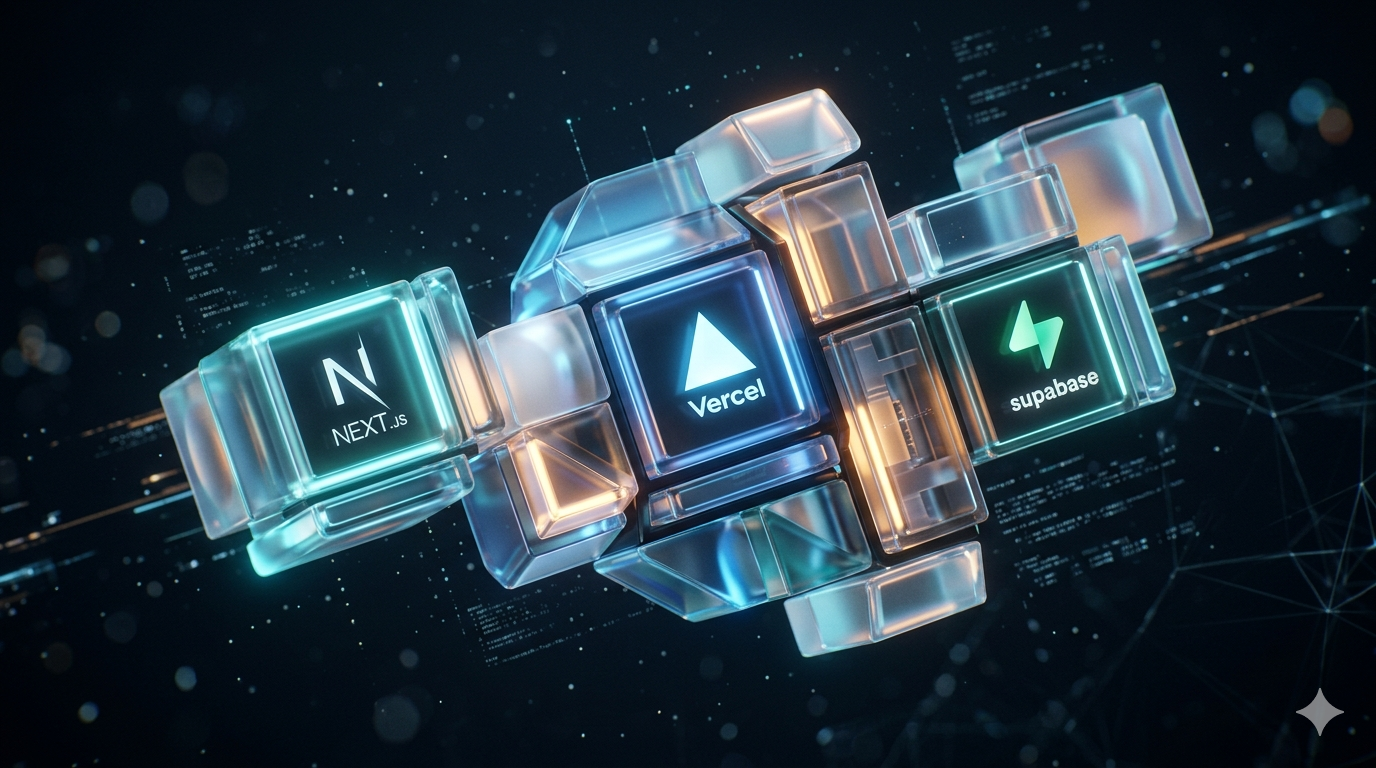
Last summer I was helping my uncle in his carpentry workshop and tried to drive the best steel nail I had into an old, worn-out piece of wood. The nail didn't go in, and the board split right down the middle. My uncle looked at me over his glasses and said: "Drive a golden nail into rotten wood and it still won't hold. The craft isn't in the tool; it's in choosing the right material for that tool to work."
That is the biggest mistake people make when building products with AI. Trying to build with AI on top of an old-generation tech stack, ten years old, heavy on boilerplate, with files tangled into each other like spaghetti, is driving a golden nail into rotten wood. A Vibe Coder is the person who sets up the workbench where the AI works most comfortably, with the fewest errors and in the most predictable way.
Why Is an AI-Native Tech Stack Different?#
In traditional software we chose technologies by looking at performance, community support or server costs. In the vibe coding era the primary metric is this: "How well can the AI grasp this framework's context in one go?"
AI models are pattern-matching machines. If the technology you choose involves a lot of abstraction, with styles in one file, logic in another and data fetching in a completely different service, the AI can't hold that context together, and the hallucinations start.
Here is the trio that sends the output of 2026's real Vibe Coders sky-high:
1. Frontend and logic: Next.js (App Router) AI loves React, because half the internet is written in React. The model's training data is full of React patterns. Next.js's App Router architecture takes this one step further. Because the folder structure maps directly to URL routes (file-based routing), when you tell the AI "Build me a dashboard page", it knows without a second's thought where to put the file and where to fetch the data (Server Components). Predictability is the AI's best friend.
2. Styling: Tailwind CSS Plenty of old-school developers dislike Tailwind because it clutters the HTML. For a Vibe Coder, though, Tailwind is a lifeline. Why? Because when you ask the AI to make a button red and round its corners a bit, the AI having to find the styles.css file, write a class there, then come back and add that class to the component means two separate context windows. With Tailwind, everything lives in the same file. The AI dresses the component in its styles on the same line, while it writes it. The context doesn't break, the flow doesn't stall.
3. Backend and database: Supabase (or similar BaaS platforms) What did we say in Chapter 1? Code is a liability. Writing a Node.js or Go backend from scratch for user sign-up, password reset emails or simple CRUD (Create, Read, Update, Delete) operations is a betrayal of the Vibe Coder philosophy. Postgres-based platforms like Supabase give you ready-made APIs the moment you create your database schema. You just tell the AI, "Write the SQL that creates this table structure." You paste it into Supabase, and the backend is done. All the energy you have left goes into the product's user experience.
So when you make your architecture decision, don't ask yourself "How would I write this code?" Ask "How does the AI move around inside this structure without getting lost?" Choose the right stack, and refactoring work that used to take days comes down to seconds.
In the next chapter we'll put the most critical part of this workbench on the table, the place where AI stumbles the most: "Database Schema Design" (Chapter 2.2, in Turkish).



Comments
0 comments
Leave a comment