JS Callback Mess: The Redemption Tale of Promises and Async/Await
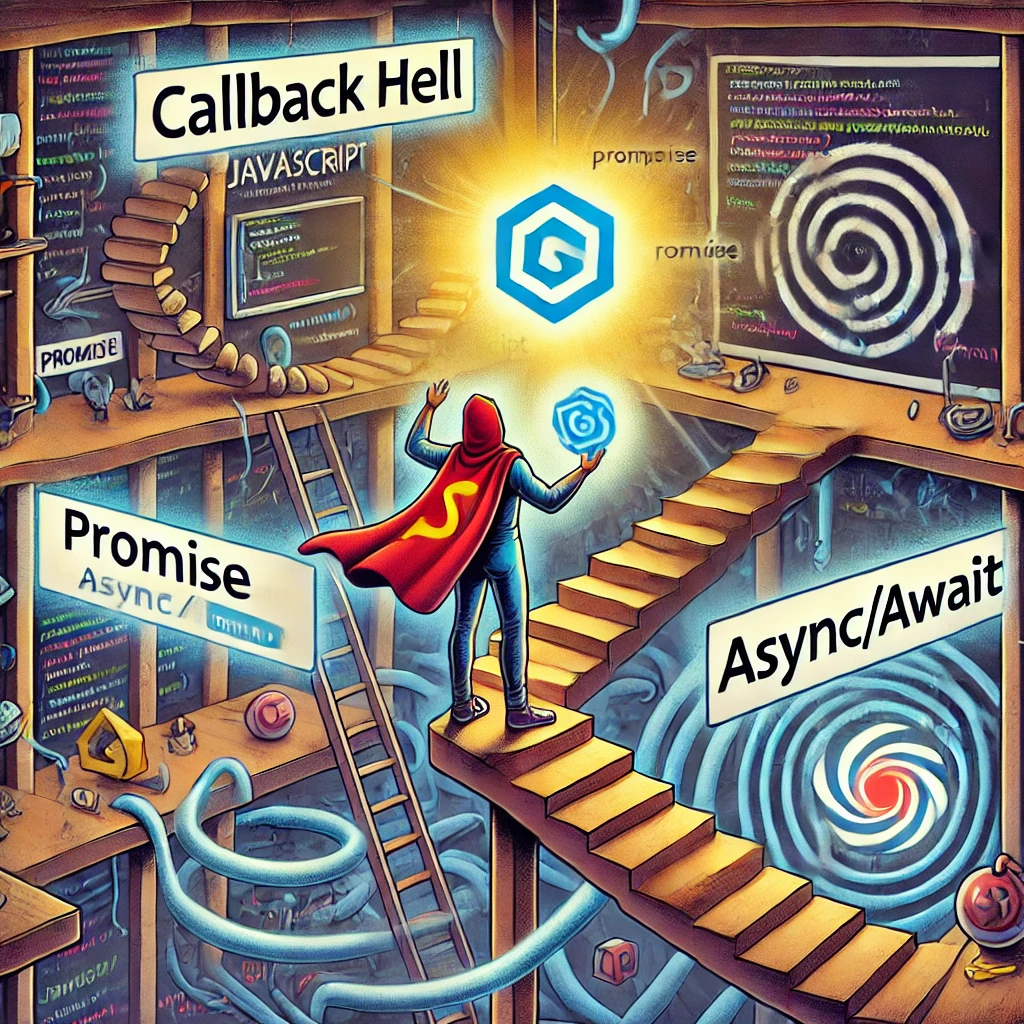
Once upon a time in the world of JavaScript, there was a fearsome beast called "Callback Hell." This monster turned innocent code into a labyrinth, making it nearly impossible to read or maintain. Every time you revisited your code, it felt like watching Inception—layer upon layer of complexity unfolding as you asked yourself:
"Will I ever escape this nightmare?"
But fear not, dear coder, for this story has a hero: Promises and Async/Await. Let’s dive into this redemption tale together.
If you’ve written JavaScript, you’ve probably faced a scenario like this:
JavaScript
getUserData(function (user) { getPosts(user.id, function (posts) { getComments(posts[0].id, function (comments) {console.log(comments); }); });});
Behold, the infamous "callback pyramid"! This structure doesn’t just make your code look bad—it actively challenges your sanity. And when an error creeps in, finding and fixing it can feel like playing detective in a high-stakes mystery novel.
To combat the madness of nested callbacks, JavaScript introduced Promises—a feature that promises (pun intended) to clean up your code. Promises simplify asynchronous operations and make them easier to manage.
Here's how our earlier example looks with Promises:
Just when we thought Promises were the ultimate savior, JavaScript gifted us Async/Await—a feature that makes asynchronous code look and feel synchronous. It's like traveling to a future where callbacks never existed.
Here’s how the same example looks with Async/Await:
See the difference? This code is straightforward, easy to read, and feels like storytelling: "First, fetch user data. Then, get their posts. Next, retrieve the comments. Finally, display them."
As developers, our dream is to write code that flows like a good movie script. With Promises and Async/Await, that dream becomes a reality. The Callback Hell beast has been slain, leaving behind clean, maintainable, and joyful code.
Remember, "Behind every great codebase lies an elegant design." By mastering Promises and Async/Await, you're setting yourself up for success.
So, the next time you revisit your code and see the clarity you’ve achieved, you can smile and say:
"This story has a proper ending after all!" 😊
Another Software Developer
Comments
0 comments
Leave a comment
This site uses Google Analytics to count visits. Analytics cookies load only if you agree. Privacy and cookies
Comments
0 comments
Leave a comment